When it comes to protecting your teeth, you have probably heard about both fluoride and xylitol. They both appear on toothpaste labels, in mouth rinses, and in recommendations from dental professionals. But they work in very different ways — and understanding the difference helps you make the best choices for your oral health.
If you are interested in preventive dental care in Calgary, knowing how these two ingredients work separately and together is valuable information. A dental hygienist in Calgary can guide you on using both effectively, but understanding the basics helps you optimize your daily routine.
What Is Fluoride and How Does It Work?
Fluoride is a mineral naturally found in water, soil, and many foods. For decades, it has been the gold standard in cavity prevention.
Here is how fluoride works:
- It strengthens tooth enamel by helping minerals remineralize the tooth surface. When enamel is exposed to acid—from food, drinks, or bacteria—it weakens. Fluoride helps repair this damage by replacing lost minerals.
- It reduces the ability of cavity-causing bacteria to produce acid. This means less acid is created to attack your teeth.
- It is absorbed into the enamel, making it harder and more resistant to decay.
Fluoride works on a chemical level, physically strengthening the tooth structure itself. This is why fluoride has been so effective at reducing cavities for so long.
What Is Xylitol and How Does It Work?
Xylitol is a natural sugar alcohol derived from plants like birch trees and corn cobs. Unlike regular sugar, it does not feed cavity-causing bacteria.
Here is how xylitol works differently:
- It cannot be fermented by cavity-causing bacteria to produce acid. This means bacteria cannot use xylitol as fuel the way they use regular sugar. The bacteria essentially starve.
- It actually inhibits bacterial growth. Research shows that xylitol has antimicrobial properties that reduce the overall bacterial population in your mouth.
- It stimulates saliva production. More saliva means better natural protection for your teeth and gums.
- It does not provide direct enamel strengthening like fluoride does. Instead, it creates an oral environment where cavity-causing bacteria cannot thrive.
Xylitol vs Fluoride Benefits for Teeth
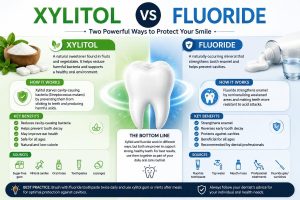
Understanding xylitol vs. fluoride benefits for teeth helps you see how they complement each other.
Fluoride benefits:
- Directly strengthens enamel
- Remineralizes weakened tooth surfaces
- Has built up a proven track record over many decades
- Operates uniformly on every tooth
- Supported by research suggesting it works
Xylitol benefits:
- Prevents bacteria from producing damaging acid
- Reduces overall bacterial population in the mouth
- Stimulates protective saliva production
- Works particularly well against specific cavity-causing bacteria like Streptococcus mutans
- Supports overall oral health without fluoride
Is Xylitol as Effective as Fluoride?
This is the question many people ask. Is xylitol as effective as fluoride depends on how you measure effectiveness.
Fluoride is slightly more effective at preventing cavities when used alone. Studies consistently show that fluoride reduces cavity formation by about 25% compared to not using fluoride.
Xylitol alone reduces cavities by about 25 to 30% in some studies — comparable to fluoride. But the comparison is not straightforward because they work differently.
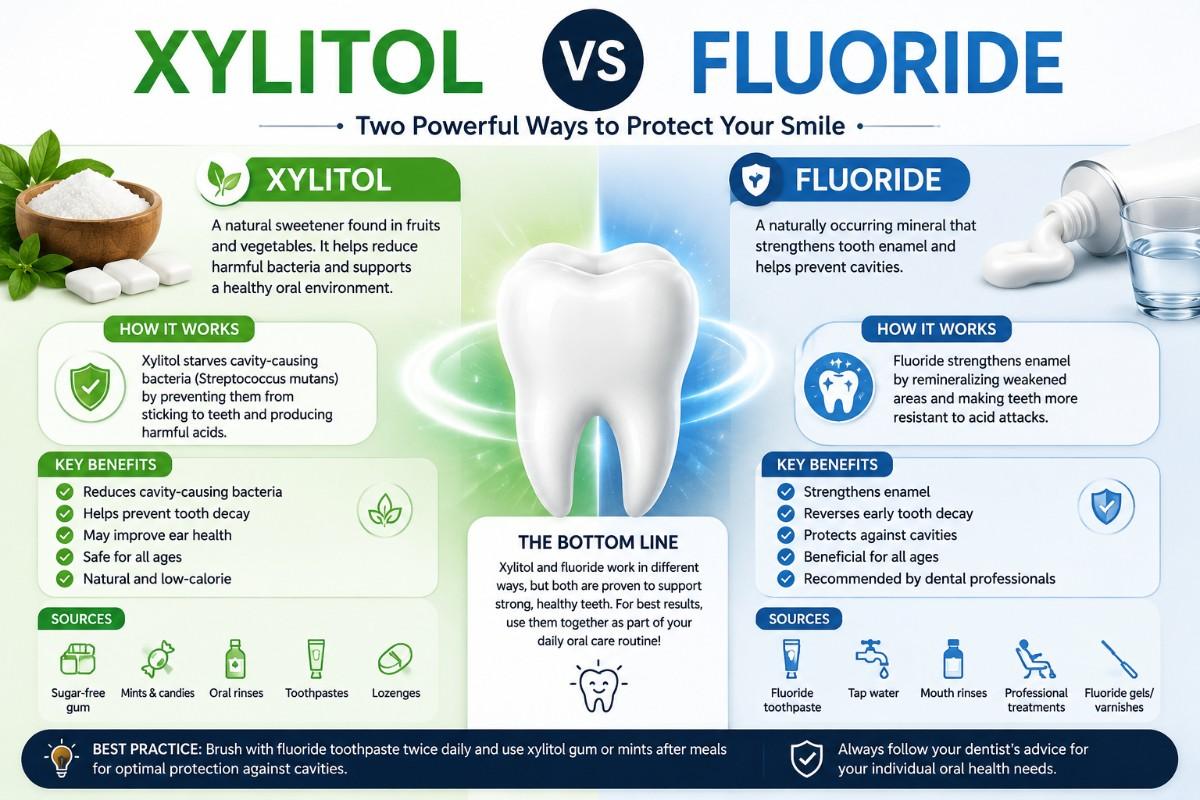
The real answer is that they work best together. Fluoride strengthens enamel while xylitol prevents bacteria from creating the acid that damages enamel. Combined, they provide more comprehensive protection than either alone.
How Fluoride and Xylitol Help Prevent Cavities
How fluoride and xylitol help prevent cavities involves both preventing damage and promoting healing.
- Fluoride strategy: Strengthen the tooth structure so it can better resist acid attack.
- Xylitol strategy: Prevent the acid attack from happening in the first place by eliminating the bacteria’s food source.
- Together: Prevent acid production while simultaneously strengthening teeth against any remaining acid exposure.
A hygienist dental clinic near you can recommend products containing both ingredients to maximize your cavity prevention strategy.
When to Use Each
For most people, the answer is simple — use both:
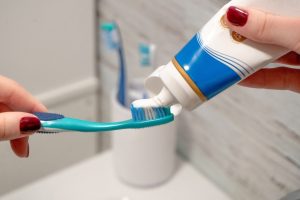
- Use fluoride toothpaste twice daily. This is the foundation of cavity prevention.
- Use xylitol-containing products like gum or mints after meals. Studies show that chewing xylitol gum for 5 to 10 minutes after eating significantly reduces cavity risk.
- Consider a xylitol mouth rinse for additional protection, particularly if you have high cavity risk.
If you cannot use fluoride for any reason, xylitol becomes more important as your primary cavity-fighting tool.
Optimize Your Cavity Prevention Strategy — Serenity Smiles Is Here for You
Whether you choose fluoride, xylitol, or both, the key is consistent daily use combined with professional preventive care. A comprehensive approach to cavity prevention gives you the best possible protection for your teeth.
At Serenity Smiles, our whole team is committed to helping you understand and implement the most effective preventive methods for you. Schedule your appointment with our dental clinic today for cavity prevention.
Frequently Asked Questions
If I’m at high cavity risk, should I use more xylitol or fluoride?
For individuals at high risk for cavities, brushing with standard fluoride toothpaste at least twice each day and using xylitol products following all meals is recommended. Your dentist may also recommend additional professional fluoride treatments.
Is xylitol safe to use every day?
Yes, xylitol is safe for daily use and has no known serious side effects, though consuming large amounts in sugar-free products can cause digestive upset in some people.
Does fluoride have any side effects?
Fluoride toothpaste used as directed is safe—swallowing large amounts can cause a condition called “fluorosis” in children with developing teeth, which is why children should use only a pea-sized amount of toothpaste.
Which is better for children — xylitol or fluoride?
Both are beneficial for children — fluoride toothpaste is essential for developing teeth, and xylitol-containing products like gum can provide additional protection for children old enough to chew gum safely.